





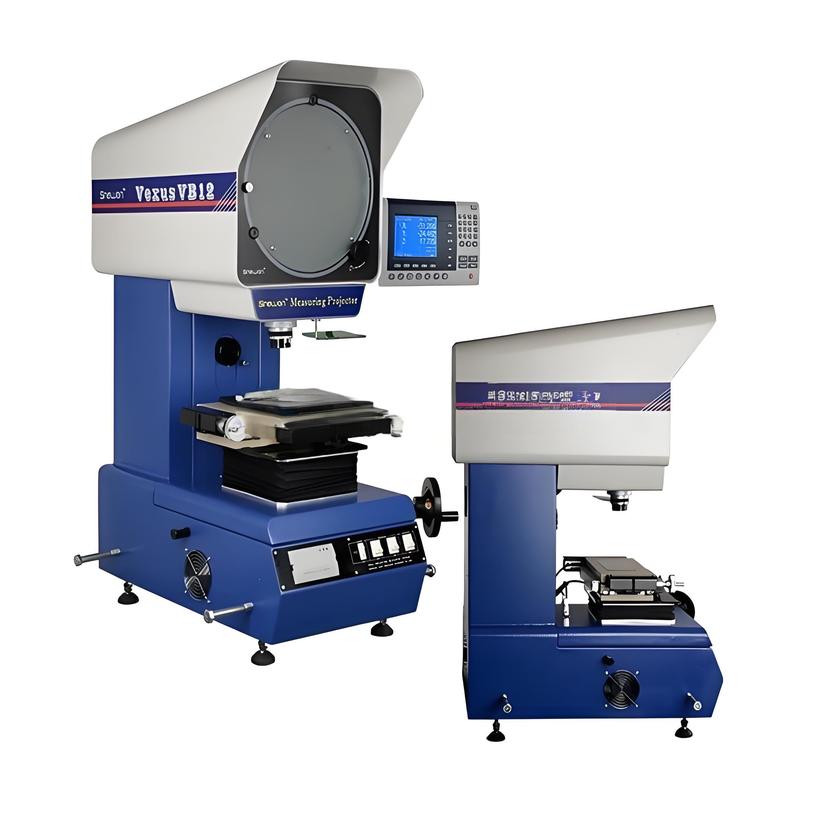
1. Effect of Burrs on Measurement
In manufacturing processes such as stamping or machining, small burrs are often present along edges.
Although barely visible to the naked eye, these burrs are magnified in a profile projector. When illuminated by backlight, they may appear as sharp protrusions.
If the system detects the burr tip as the actual edge, the measured dimension will be larger than the true value.
2. How to Reduce Burr-Related Errors
Several methods can help reduce burr-related inaccuracies:
Adjust illumination intensity to avoid exaggerating burr edges
Use top (reflected) light for visual comparison
Apply deburring processes when high precision is required
Combining different observation methods improves edge judgment.
3. Influence of Glass Stage Flatness
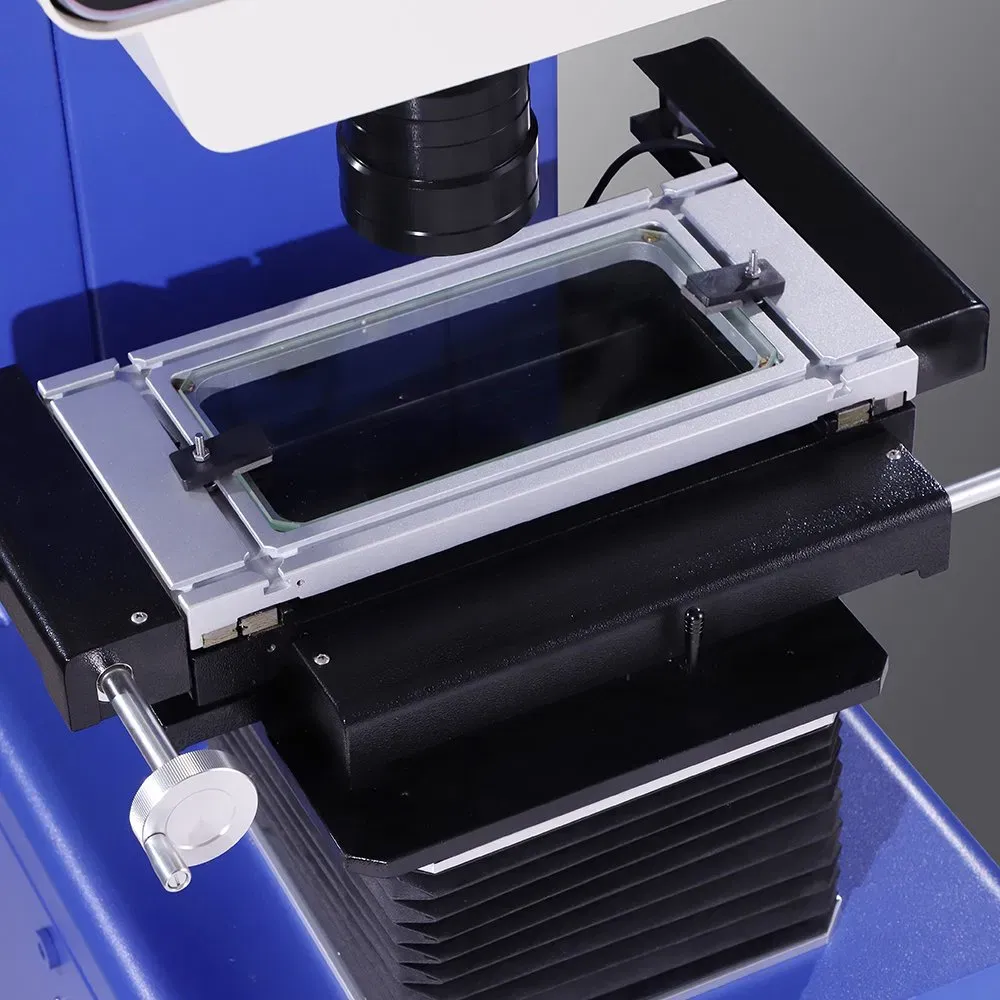
The glass stage serves as the reference plane for measurement. Its flatness directly affects accuracy.
Even slight deformation can lead to inconsistent measurement results across different positions.
Key influencing factors include:
Manufacturing quality of the glass
Support structure design
Long-term mechanical stress
4. Support Structure and Deformation
Some systems use three-point support, which may cause slight bending due to gravity.
More stable designs include:
Multi-point uniform support
Full-surface support with elastic contact
These structures help maintain better flatness and measurement consistency.
5. How to Verify Stage Accuracy
During machine acceptance, a standard glass scale can be used:
Place the scale at multiple positions (corners and center) and measure the same nominal length. Compare the readings.
If significant differences are observed, it may indicate stage deformation or optical inconsistency.
6. Limitations for Transparent Parts
Backlight measurement only works for opaque objects.
Transparent materials such as:
Glass
Acrylic
Clear plastics
allow light to pass through, making it impossible to form a visible contour.
7. Common Misunderstandings
Some users attempt to:
Elevate the part
Use side lighting
However, these methods are unstable and unsuitable for precision measurement.
The correct solution is to use reflected (top) lighting. Therefore, machine configuration should be selected based on actual application needs.
8. Acceptance Testing Recommendations
Before putting the machine into use, it is recommended to perform:
Multi-position scale measurement for consistency
Rounded-edge part testing under different lighting
Transparent part testing (if applicable)
These tests help evaluate real-world performance.
Conclusion
Although profile projector technology is mature, practical measurement is affected by multiple factors such as burrs, stage flatness, and lighting conditions.
Understanding these limitations helps users avoid common mistakes and achieve more reliable inspection results.