





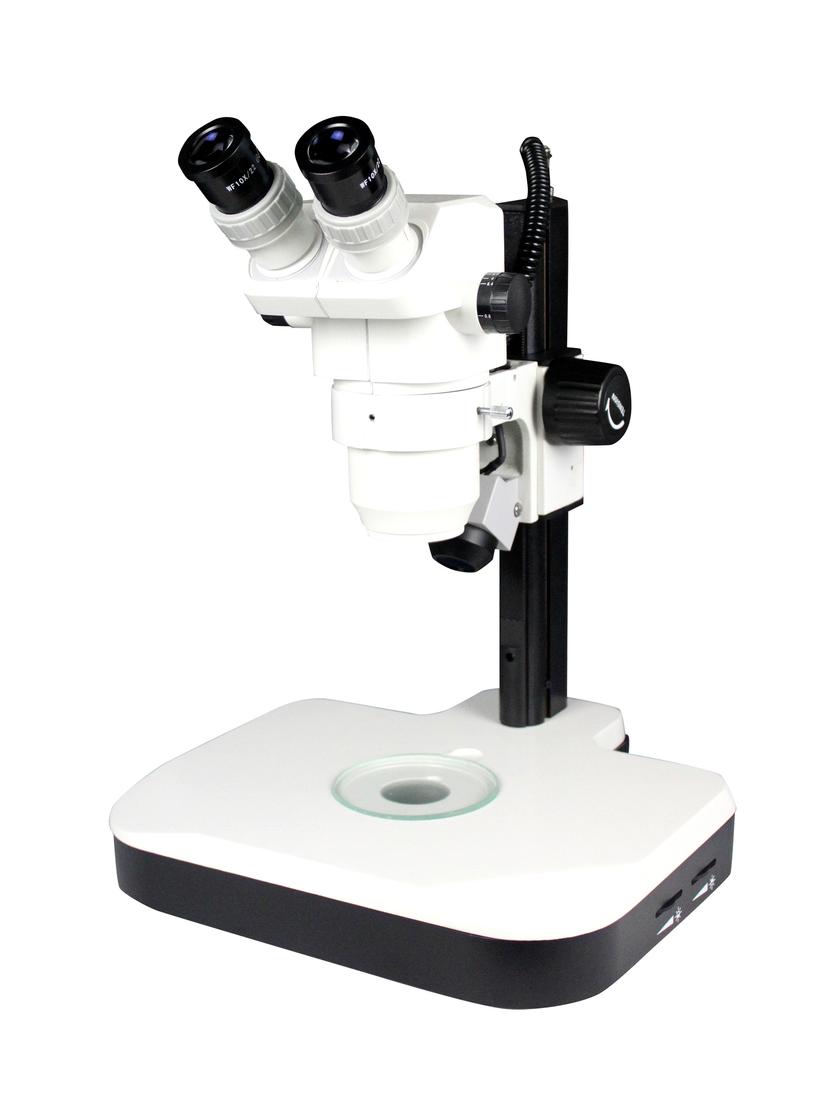
The infinity optical system is widely used in industrial microscopes and video measuring systems. Compared with traditional finite optical structures, its key improvement is not only in imaging quality, but in the architectural redesign of the optical path—especially the parallel light region between the objective lens and the tube lens.
This structure transforms the optical system from a fixed imaging configuration into a modular and scalable platform.
1. From Coupled to Decoupled Optical Structure
In a finite optical system, the objective lens is directly linked to the image plane. Any adjustment in the optical path affects the final imaging position, making the system highly coupled and less flexible.
In an infinity optical system, the objective converts image information into parallel light, and the tube lens performs final imaging. A stable parallel light region is formed between them, where no real image is created.
This allows the system to shift from a tightly coupled structure to a decoupled optical architecture.
2. Engineering Value of the Parallel Light Region
The parallel light region between the objective and tube lens serves as a functional expansion space. Various optical components can be inserted without affecting the final image position, such as:
Polarization modules
Beam splitting systems
Interference filters
Fluorescence detection units
Multispectral filter components
These elements modify the properties of light rather than the imaging geometry, enabling flexible system expansion.
3. Three Key Advantages
1. Clear Functional Separation
The objective handles image acquisition, the tube lens performs imaging, and the intermediate space is used for optical function expansion.
2. Standardization and Modularity
Parallel light output enables standardized matching between different objectives and tube lenses, supporting modular system design in industrial applications.
3. Enhanced System Scalability
Additional modules such as cameras, image processing units, and AI-based analysis systems can be integrated without modifying the core optical structure.
4. Typical Industrial Applications
In industrial inspection, this structure enables multi-task processing through beam splitting, such as:
Dimensional measurement
Image capture and recording
Surface defect analysis
Compared to traditional systems that require multiple devices or repeated measurements, an infinity optical system can complete multiple tasks in a single setup, improving efficiency and consistency.
In material analysis, different optical modules can be added for polarization observation, surface stress analysis, and microstructure identification.
Conclusion
The key value of the parallel light region in an infinity optical system lies in its ability to transform a closed optical structure into an expandable platform. It not only improves imaging performance but also enhances modularity and system scalability, making it a fundamental design in modern precision optical inspection equipment.
For more details, please visit: https://www.jatentech.com/products/microscope